The nerve version of Golden Nerves lists five ingredients and discloses none of their amounts. The selection is actually reasonable — three have real neuropathy research — but the doses are hidden and the liquid format cannot carry the studied ones. This page takes each in turn.
The direct answer
Five nerve ingredients: alpha lipoic acid, acetyl L-carnitine, a vitamin B complex, Lion's Mane and turmeric. Three have real neuropathy research; none has a disclosed amount; and their studied doses are gram-level, which a liquid dropper cannot carry.
If you have nerve symptoms — tingling, burning, numbness or weakness, especially in the hands and feet — see a doctor before buying any supplement. The common causes (diabetes, B12 deficiency, thyroid disease) are largely treatable when found, and a liquid dropper is not a substitute for finding them. Neither page selling Golden Nerves says this.
The nerve formula
| Ingredient | Amount on label | Research context |
|---|---|---|
| Alpha Lipoic Acid (ALA) | undisclosed | 600 mg/day in diabetic-neuropathy trials |
| Acetyl L-Carnitine (ALCAR) | undisclosed | 1,000–2,000 mg/day in neuropathy studies |
| Vitamin B Complex | undisclosed | B12 & B1 relevant to nerves; high B6 can HARM nerves |
| Lion's Mane Mushroom (Hericium erinaceus) | undisclosed | 1,000–3,000 mg/day in most human studies |
| Turmeric Extract (Curcuma longa) | undisclosed | 500–2,000 mg/day of extract; poor absorption |
No amount is disclosed — and why that matters here
Not one of the five ingredients has a published amount, and there is no Supplement Facts panel on either official site. For ingredients whose studied doses run into hundreds or thousands of milligrams, a hidden amount is the difference between an active dose and a token trace — and the label gives you no way to tell which. It also hides the one figure that matters most for safety here: the B6 content.
The dose a dropper cannot hold
Even if the amounts were generous, the format caps them. The three evidence-based ingredients were studied at gram-level daily doses — alpha lipoic acid 600 mg, acetyl L-carnitine 1–2 g, Lion's Mane 1–3 g — and a dropper serving of a few drops is about 0.1 mL, roughly 100 mg of liquid. You cannot dissolve grams of solids into it. This is a physical ceiling, not a formulation choice.
Comparing Golden Nerves bundles
The Golden Nerves discount is applied by bundle size: $69 for one bottle, $59 for three, $49 for six. Three bottles covers a fair assessment and ships free.
Check Golden Nerves Bundle PricesOfficial website checkout · 60-day guarantee · confirm the terms before paying
Every ingredient, examined
1. Alpha Lipoic Acid (ALA) Partly
Is the alpha lipoic acid in Golden Nerves a real nerve ingredient?
Yes — this is the best-evidenced ingredient in the formula. Alpha lipoic acid is an antioxidant genuinely studied for diabetic peripheral neuropathy, where trials used 600 mg daily. The catch is that Golden Nerves discloses no amount, and 600 mg is a great deal to fit into a few drops.
ALA has real human trials in nerve pain, tingling and burning from diabetic neuropathy (the ALADIN and SYDNEY studies among them), at 600 mg daily. That is a legitimate, sensible choice for a nerve product. Two problems remain: the amount here is undisclosed, and — as the dose-and-format section explains — 600 mg is physically difficult to deliver in a liquid dropper serving. On the competitor's own site its description is scrambled, calling it a botanical that “contains mucilage”, which ALA is not.
Worth knowing: ALA can lower blood sugar — important with diabetes medication, and diabetics are the main neuropathy population. May affect thyroid hormone. · NCCIH — dietary supplements
2. Acetyl L-Carnitine (ALCAR) Partly
What does acetyl L-carnitine do for nerves?
It is an amino-acid derivative studied for diabetic neuropathy — another reasonable choice — at 1,000 to 2,000 mg daily. Its amount here is undisclosed, and a gram or two is far more than a dropper serving can hold. The competitor calls it “a traditional botanical”, which it is not.
ALCAR has genuine trials in diabetic neuropathy suggesting benefit for nerve pain and possibly nerve fibre regeneration, at 1,000 to 2,000 mg daily. Like ALA it is a sound ingredient choice for a nerve formula. And like ALA, the studied dose is measured in grams, the amount here is undisclosed, and the liquid format makes a therapeutic dose implausible. Its description on the selling page is wrong on two counts — it is neither a botanical nor a relaxation-and-sleep ingredient.
Worth knowing: May cause a fishy body odour and stomach upset; can interact with thyroid medication and warfarin. · NIH ODS — Carnitine
3. Vitamin B Complex Partly
Is the B complex in Golden Nerves good or bad for nerves?
Both, potentially — and the undisclosed amount is exactly why that matters. B12 and B1 have genuine roles in nerve health, but high-dose B6 taken over time is a known cause of sensory neuropathy. Without amounts, you cannot tell which side of that line this sits on.
B vitamins are the most double-edged ingredient here. B12 deficiency is a classic cause of neuropathy, and benfotiamine (a B1 form) has diabetic-neuropathy research — so a B complex is a reasonable inclusion. But vitamin B6, in high doses over months, causes a sensory peripheral neuropathy of its own: the exact tingling and numbness this product markets against. A “B complex” with no amounts means a buyer cannot know the B6 level, and on the selling page it is absurdly described as “a traditional botanical”.
Worth knowing: High-dose B6 over time can cause peripheral neuropathy. Anyone already taking a B6 or B-complex supplement should total their intake. · NIH ODS — Vitamin B6
4. Lion's Mane Mushroom (Hericium erinaceus) Not supported
Does the Lion's Mane in Golden Nerves help nerves?
Possibly in principle — it is studied for nerve growth factor, not for “calming” as the selling page claims — but the human evidence is early and the studied dose is 1,000 to 3,000 mg daily, far beyond what a dropper delivers, and undisclosed here.
Lion's Mane is studied for its possible stimulation of nerve growth factor (NGF) and early, preliminary signals in mild cognitive complaints, at 1,000 to 3,000 mg daily. That is a nerve-relevant mechanism in theory, so its inclusion is not unreasonable — but the human evidence is thin, the studied dose is gram-level, the amount here is undisclosed, and a liquid dropper cannot carry it. The selling page's description — “calming effects on nerve activity” — misstates what it is studied for.
Worth knowing: Generally well tolerated; rare allergic reactions, especially in those with mushroom allergy. · NCCIH — dietary supplements
5. Turmeric Extract (Curcuma longa) Not supported
What does the turmeric in Golden Nerves add?
General antioxidant support, not a specific nerve treatment. Curcumin is a genuine antioxidant with preclinical neuroprotection signals, but poor oral absorption, an undisclosed amount here, and no absorption enhancer named all limit it.
Turmeric is the ingredient that gives the product its “golden” identity, and curcumin is a real antioxidant studied at 500 to 2,000 mg of extract daily across many conditions. Its nerve evidence is largely preclinical. Curcumin's central weakness is bioavailability — taken alone it is poorly absorbed, which is why studies pair it with piperine. Golden Nerves names no absorption enhancer and discloses no amount, so even a reasonable dose may deliver little.
Worth knowing: High-dose curcumin can affect bleeding and interact with warfarin; stop before surgery. · NCCIH — Turmeric
The other site's seven ingredients
For completeness — because it is sold under the same name — the other official Golden Nerves is a different formula entirely, a metabolic and weight-loss stack with no established nerve role:
- Chromium. A trace mineral for blood-sugar and metabolism — not a nerve ingredient.
- Maca Root Extract. An adaptogen used for energy and libido — no established nerve role.
- African Mango Seed. An appetite/weight-loss ingredient (Irvingia) — no nerve role.
- Grape Seed Extract. An antioxidant used for circulation — not a nerve ingredient.
- Guarana Seed Extract. A caffeine source — a stimulant, and the opposite of calming.
- Green Tea Leaf. Caffeine plus EGCG, a metabolism/weight-loss ingredient — also a stimulant.
- Cayenne Pepper. A thermogenic (capsaicin) used for weight loss — not a nerve ingredient.
It also contains guarana and green tea (both caffeine) while calling itself stimulant-free, which contradicts the calm-and-sleep positioning of the nerve version.
Reading the formula as a whole
The nerve version is a genuinely thoughtful shortlist — alpha lipoic acid and acetyl L-carnitine are among the few supplement ingredients with real diabetic-neuropathy research. If it disclosed studied doses in a format that could deliver them, this would be a promising product. As sold — hidden amounts, gram doses in a dropper, and a second unrelated formula under the same name — the good thinking does not reach the buyer.
Cautions and interactions
- Vitamin B complex: high-dose B6 over time can cause neuropathy; total your intake if you take another B supplement.
- Alpha lipoic acid: can lower blood sugar; monitor if you take diabetes medication.
- Turmeric, acetyl L-carnitine: can affect bleeding or interact with warfarin; stop before surgery.
- The other formula: guarana and green tea are caffeine; caution with heart or blood-pressure conditions.
Read how these work together, or see the claim-by-claim benefit rulings.
Questions people ask about this
What are the ingredients in Golden Nerves?
The nerve version lists alpha lipoic acid, acetyl L-carnitine, a vitamin B complex, Lion's Mane and turmeric extract, with no amounts disclosed. The other official site lists a different set: chromium, maca, African mango, grape seed, guarana, green tea and cayenne.
Which of these actually help nerves?
Alpha lipoic acid, acetyl L-carnitine and the B vitamins have genuine nerve research. The problem is that their studied doses are gram-level, none is disclosed, and a dropper cannot carry them.
Does Golden Nerves have a Supplement Facts panel?
Neither official site publishes one, and no ingredient amount is given on either formula.
Is the turmeric well absorbed?
The amount is undisclosed and no absorption enhancer such as piperine is named, so even a reasonable amount of curcumin may deliver little.
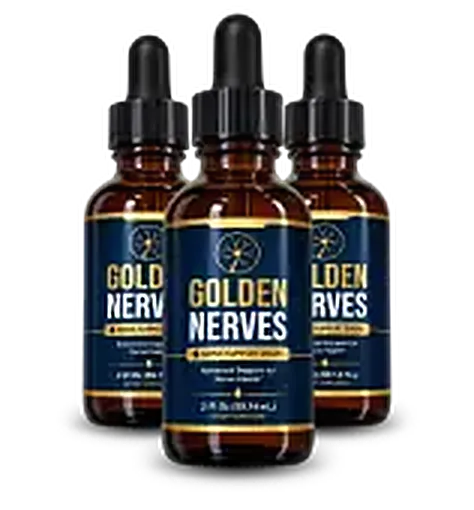
Golden Nerves Official Website
per bottle on the 6-bottle pack · free US shipping on 3 and 6
Check Current Price 60-day guarantee · official checkout only